Poets
Poets weave emotions with eloquent words
70 Poets
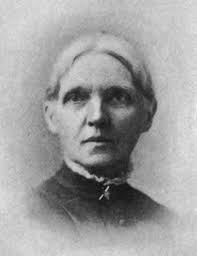
Julia Abigail Fletcher Carney
Julia Abigail Fletcher was born on the 6th April 1823 in Lancaster, Massachusetts. Her ancestors included important military figures from the American Revolution and it is believed that she inherited her strong sense of patriotism from them. She was expressing her thoughts in verse from a very early age, sometimes relying on her siblings to write them down, but an aunt expressed dismay to her mother that she should not be allowed to continue doing so. Julia was banned from writing for a while but this did not last too long. Julia Abigail Fletcher Carney was an American poet and teacher of the 19th century who wrote under a number of pseudonyms including “Sadie Sensible” and “Minnie May”. Much of her work was religiously-themed and her words were often set to music and sung as hymns. These were so popular that they could be found in American hymn books for at least fifty years after publication.
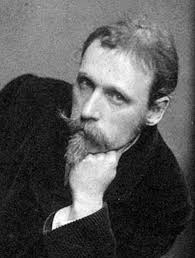
Walter Crane
Walter Crane (15 August 1845 – 14 March 1915) was an English artist and book illustrator. He is considered to be the most influential, and among the most prolific, children's book creators of his generation and, along with Randolph Caldecott and Kate Greenaway, one of the strongest contributors to the child's nursery motif that the genre of English children's illustrated literature would exhibit in its developmental stages in the later 19th century. Crane's work featured some of the more colourful and detailed beginnings of the child-in-the-garden motifs that would characterize many nursery rhymes and children's stories for decades to come. He was part of the Arts and Crafts movement and produced an array of paintings, illustrations, children's books, ceramic tiles, wallpapers and other decorative arts. Crane is also remembered for his creation of a number of iconic images associated with the international socialist movement.
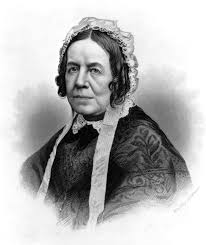
Sarah Josepha Hale
Sarah Josepha Hale was born on October 24th, 1788 in Newport, New Hampshire. Her parents were strong advocates for education of both sexes. Therefore, Hale was taught well beyond the normal age for a woman. Later, she married a lawyer David Hale, who supported her in all scholarly endeavors. Sadly, her husband died after only nine years of marriage, leaving Hale a widow with five children. She turned to poetry as a form of income. Her most famous book, titled Poems for Our Children included a beloved story from her childhood. “Mary Had a Little Lamb” was instantly a popular nursey rhyme.
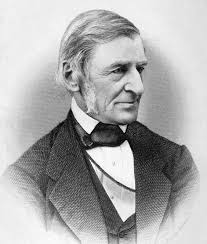
Ralph Waldo Emerson
Ralph Waldo Emerson, (born May 25, 1803, Boston, Massachusetts, U.S.—died April 27, 1882, Concord, Massachusetts), American lecturer, poet, and essayist, the leading exponent of New England Transcendentalism. Emerson died on April 27, 1882, in Concord. His beliefs and his idealism were strong influences on the work of his protégé Henry David Thoreau and his contemporary Walt Whitman, as well as numerous others. His writings are considered major documents of 19th-century American literature, religion and thought.
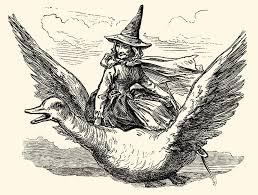
Mother Goose
Mother Goose is often cited as the author of hundreds of children’s stories that have been passed down through oral tradition and published over centuries. Various chants, songs, and even games have been attributed to her, but she is most recognized for her nursery rhymes, which have been familiar with readers of all generations. Her work is often published as Mother Goose Rhymes.
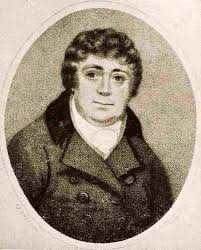
Samuel Arnold
Samuel Arnold (1740-1802) was a dominating figure of his time whose works. enjoyed critical acclaim and popular success. In the twentieth century he has remained known as the editor of Handel’s works but his reputation as a composer, strong in his own time, has suffered a critical eclipse. The intention of the present thesis is to provide the first specialized study of Samuel Arnold. In so doing the author aims to examine his accomplishments as a prominent musician, to re-establish his critical reputation as a composer, and at the same time to offer a thematic bibliographic catalogue of his works.
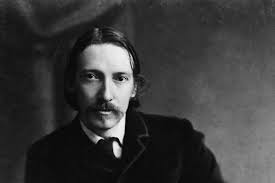
Robert Louis Stevenson
Robert Louis Balfour Stevenson was born at Edinburgh, Scotland, on November 13, 1850. He was a sickly youth, and an only son, for whom his parents had high hopes. When at last Stevenson was able to attend school, he did extremely well and entered the university at sixteen. His family expected him to become a lighthouse engineer, a family profession, but Stevenson agreed, as a compromise, to study law instead. He was a young rebel; he thought that his parents' religion was an abomination, and he soon became known as a bohemian, ranting about bourgeois hypocrisy.
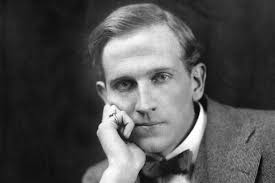
Alan Alexander Milne
A.A. Milne, (born January 18, 1882, London, England—died January 31, 1956, Hartfield, Sussex), English humorist, the originator of the immensely popular stories of Christopher Robin and his toy bear, Winnie-the-Pooh. After attending the University of Cambridge's Trinity College and writing for the literary magazines Granta and Punch, A.A. Milne began a successful career as a novelist, poet and playwright in the 1920s. His best-known works are his two collections of children's poetry, When We Were Young and Now We Are Six, and his two books of stories about the lovable bear Winnie-the-Pooh and his animal friends.
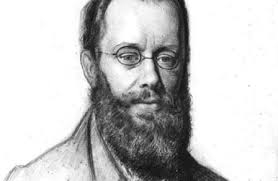
Edward Lear
Edward Lear, (born May 12, 1812, Highgate, near London, England—died January 29, 1888, San Remo, Italy), English landscape painter who is more widely known as the writer of an original kind of nonsense verse and as the popularizer of the limerick. His true genius is apparent in his nonsense poems, which portray a world of fantastic creatures in nonsense words, often suggesting a deep underlying sense of melancholy. Their quality is matched, especially in the limericks, by that of his engaging pen-and-ink drawings.
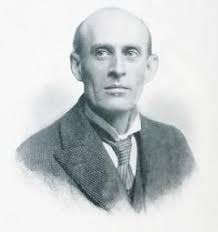
Eugene Field
Known for his lyrical and long-form verse, Percy Bysshe Shelley was a prominent English Romantic poet and was one of the most highly regarded and influential poets of the 19th century. Born on August 4, 1792—the year of the Terror in France—Percy Bysshe Shelley (the “Bysshe” from his grandfather, a peer of the realm) was the son of Timothy and Elizabeth Shelley. As the elder son among one brother, John, and four sisters, Elizabeth, Mary, Margaret, and Hellen, Percy stood in line not only to inherit his grandfather’s considerable estate but also to sit in Parliament one day. In his position as oldest male child, young Percy was beloved and admired by his sisters, his parents, and even the servants in his early reign as young lord of Field Place, the family home near Horsham, Sussex. Playful and imaginative, he devised games to play with his sisters and told ghost stories to an enrapt and willing-to-be-thrilled audience.
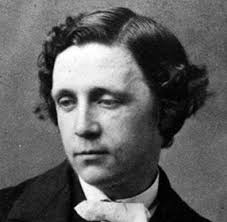
Lewis Carroll
Lewis Carroll, (born January 27, 1832, Daresbury, Cheshire, England—died January 14, 1898, Guildford, Surrey), English logician, mathematician, photographer, and novelist, especially remembered for Alice’s Adventures in Wonderland (1865) and its sequel, Through the Looking-Glass (1871). His poem The Hunting of the Snark (1876) is nonsense literature of the highest order.
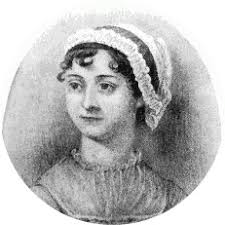
Jane Tylor
Imagine setting a simple challenge to almost anyone in the English speaking world regarding fondly remembered poems and songs from their childhood. Ask them to recite the opening lines of the first poem or song that comes to mind and there is a good chance that the majority would say: “Twinkle, twinkle, little star. How I wonder what you are”. It’s one of those little ditties that has been popular worldwide since the 19th century but it is very likely that most would not be able to state who wrote it. Well, the answer is that the English poet and novelist Jane Taylor wrote those famous words. Her poem was set to music, using an old French tune, and the legend was born! Jane was born in September 1783, in London, but she spent her early years living in the small Suffolk town of Lavenham. She had an older sister called Ann, and the pair loved to write poetry and stories together. Their parents gave the girls plenty of encouragement to write and their mother was, herself, responsible for the publication of seven books giving religious and moral advice. Their father was a dissenting minister and engraver.