Poets
Poets weave emotions with eloquent words
70 Poets
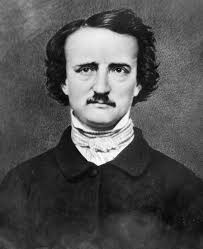
Edgar Allan Poe
Edgar Allan Poe (born January 19, 1809, Boston, Massachusetts, U.S.—died October 7, 1849, Baltimore, Maryland) American short-story writer, poet, critic, and editor who is famous for his cultivation of mystery and the macabre. His tale “The Murders in the Rue Morgue” (1841) initiated the modern detective story, and the atmosphere in his tales of horror is unrivaled in American fiction. His “The Raven” (1845) numbers among the best-known poems in the national literature. His imaginative storytelling and tales of mystery and horror gave birth to the modern detective story. Many of Poe’s works, including “The Tell-Tale Heart,” “The Raven,” and “The Fall of the House of Usher,” became literary classics. Some aspects of Poe’s life, like his literature, are shrouded in mystery, and the lines between fact and fiction have been blurred substantially since his death in 1849 at age 40.
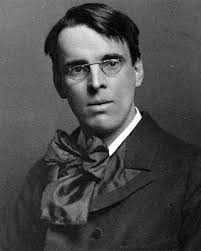
William Butler Yeats
William Butler Yeats, (born June 13, 1865, Sandymount, Dublin, Ireland—died January 28, 1939, Roquebrune-Cap-Martin, France), Irish poet, dramatist, and prose writer, one of the greatest English-language poets of the 20th century. He received the Nobel Prize for Literature in 1923. He was appointed to the Irish Senate in 1922. Yeats is one of the few writers whose greatest works were written after the award of the Nobel Prize. Whereas he received the Prize chiefly for his dramatic works, his significance today rests on his lyric achievement. His poetry, especially the volumes The Wild Swans at Coole (1919), Michael Robartes and the Dancer (1921), The Tower (1928), The Winding Stair and Other Poems (1933), and Last Poems and Plays (1940), made him one of the outstanding and most influential twentieth-century poets writing in English. His recurrent themes are the contrast of art and life, masks, cyclical theories of life (the symbol of the winding stairs), and the ideal of beauty and ceremony contrasting with the hubbub of modern life.
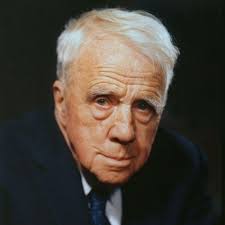
Robert Frost
Robert Frost (born March 26, 1874, San Francisco, California, U.S.—died January 29, 1963, Boston, Massachusetts) American poet who was much admired for his depictions of the rural life of New England, his command of American colloquial speech, and his realistic verse portraying ordinary people in everyday situations. Frost was the most widely admired and highly honoured American poet of the 20th century. Amy Lowell thought he had overstressed the dark aspects of New England life, but Frost’s later flood of more uniformly optimistic verses made that view seem antiquated. Louis Untermeyer’s judgment that the dramatic poems in North of Boston were the most authentic and powerful of their kind ever produced by an American has only been confirmed by later opinions. Gradually, Frost’s name ceased to be linked solely with New England, and he gained broad acceptance as a national poet.
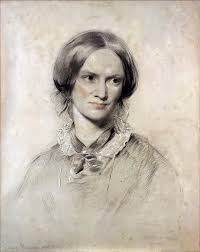
Emily Brontë
Emily Brontë (born July 30, 1818, Thornton, Yorkshire, England—died December 19, 1848, Haworth, Yorkshire) English novelist and poet who produced but one novel, Wuthering Heights (1847), a highly imaginative work of passion and hate set on the Yorkshire moors. Emily was perhaps the greatest of the three Brontë sisters, but the record of her life is extremely meagre, for she was silent and reserved and left no correspondence of interest, and her single novel darkens rather than solves the mystery of her spiritual existence. Emily went on to write almost 200 poems in her life but only a small fraction were published in her life time (Brownson). Her only novel,Wuthering Heights, is one of her most famous works. Emily was often seen as a very strange woman who never was able to leave this isolation. In September 1848. She became sick with consumption and refused medical attention in October 1848. Emily sadly died at the age of 30 only a few months later on December 9 (Brownson).
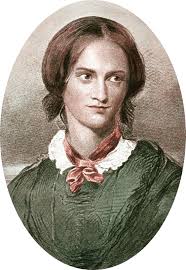
Charlotte Brontë
Charlotte Brontë, (born April 21, 1816, Thornton, Yorkshire, England—died March 31, 1855, Haworth, Yorkshire), English novelist noted for Jane Eyre (1847), a strong narrative of a woman in conflict with her natural desires and social condition. The novel gave new truthfulness to Victorian fiction. She later wrote Shirley (1849) and Villette (1853). In 1854, Charlotte married Arthur Bell Nicholls, but died the following year during her pregnancy, on March 31, 1855, in Haworth, Yorkshire, England. The first novel she ever wrote, The Professor, was published posthumously in 1857.
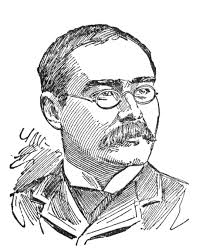
Rudyard Kipling
Rudyard Kipling, (born December 30, 1865, Bombay [now Mumbai], India—died January 18, 1936, London, England), English short-story writer, poet, and novelist chiefly remembered for his celebration of British imperialism, his tales and poems of British soldiers in India, and his tales for children. He received the Nobel Prize for Literature in 1907. Kipling was the recipient of many honorary degrees and other awards. In 1926 he received the Gold Medal of the Royal Society of Literature, which only Scott, Meredith, and Hardy had been awarded before him.
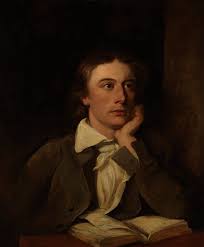
John Keats
John Keats (born October 31, 1795, London, England—died February 23, 1821, Rome, Papal States [Italy]) English Romantic lyric poet who devoted his short life to the perfection of a poetry marked by vivid imagery, great sensuous appeal, and an attempt to express a philosophy through classical legend. He is best known for his odes, including "Ode to a Grecian Urn," "Ode to a Nightingale," and his long form poem Endymion. His usage of sensual imagery and statements such as “beauty is truth and truth is beauty” made him a precursor of aestheticism.
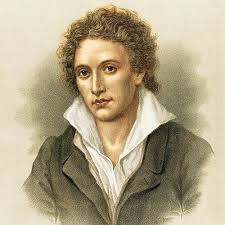
Percy Bysshe Shelley
Known for his lyrical and long-form verse, Percy Bysshe Shelley was a prominent English Romantic poet and was one of the most highly regarded and influential poets of the 19th century. Born on August 4, 1792—the year of the Terror in France—Percy Bysshe Shelley (the “Bysshe” from his grandfather, a peer of the realm) was the son of Timothy and Elizabeth Shelley. As the elder son among one brother, John, and four sisters, Elizabeth, Mary, Margaret, and Hellen, Percy stood in line not only to inherit his grandfather’s considerable estate but also to sit in Parliament one day. In his position as oldest male child, young Percy was beloved and admired by his sisters, his parents, and even the servants in his early reign as young lord of Field Place, the family home near Horsham, Sussex. Playful and imaginative, he devised games to play with his sisters and told ghost stories to an enrapt and willing-to-be-thrilled audience.
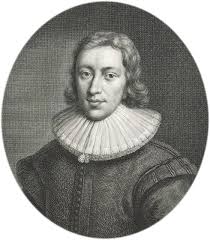
John Milton
John Milton was a 17th century historian, journalist and poet born on December 9th, 1608 in London, England. He was best known for his writing of Paradise Lost. Milton first planned to become a priest. He studied at Cambridge University and afterwards decided to abandon this path to become a full time writer and poet. Milton became very active in politics, and often wrote political pamphlets along with his other writings. As a protestant who believed in freedom of worship, Milton was often at odds with the Roman Catholic Church, an organization strongly opposed to the protestants. Eventually, John Milton would work for the English government under Oliver Cromwell after the removal of the monarchy.
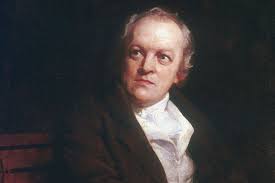
William Blake
William Blake (28 November 1757 – 12 August 1827) was an English printmaker, painter and poet. Largely unrecognised during his lifetime, Blake is now considered a seminal figure in the history of the poetry and visual arts of the Romantic Age. He saw the arts in all their forms as offering insights into the metaphysical world and his broader aims were primarily theological and philosophical.
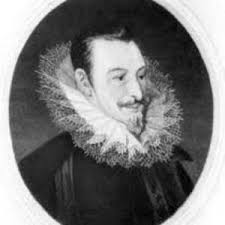
Stephen Hawes
Stephen Hawes, (flourished 1502?21), poet and courtier who served King Henry VII of England and was a follower of the devotional poet John Lydgate. Hawes' great worlc is The Pastime of Pleasure, or the Histor�e of Graunde Amoure and La Be��e Pucel, written in or about 1506, and first printed in 1509. Hawes?s main work is a long allegorical poem, The Passetyme of Pleasure, the chief theme of which is the education and pilgrimage through life of the knight Graunde Amoure.

Gawain Douglas
Gawin Douglas, Scottish poet and first British translator of the Aeneid. As a bishop and a member of a powerful family, he also played an important part in a troubled period in Scottish history. Gawain devoted himseif to study, matriculated at the University of St. Andrews in 1489, and took his degree in 1494. He published his Pa�ice of Honour in 1501, and finished his translation of the Aeneid in 151.^ He seems now to have abandoned poetry, and after many stormy intrigues. was consecrated Bishop of Dunkeid in 1515. He was carried down the 'drumiy* stream of Scotch politics, and died in exilc in London in 1522. The date of his unpubiished poem King Hart is uncertain; it was probably composed between 1501 and 1512. An admirabie edition of Douglas'works has lately been made, in four voiumes, by Mr. John Smali of Edinburgh.